


Creating a relaxing home workspace is essential for anyone working remotely or spending significant time on tasks at home. A well-designed workspace can increase productivity, reduce stress, and make your work hours more enjoyable. If you’re looking to improve your home office setup, this guide offers practical tips to create a calming environment that supports focus and comfort.
Why a Relaxing Workspace Matters
When your workspace feels comfortable and inviting, it’s easier to stay motivated and concentrate on your work. Distractions fade, and the energy you put into your tasks becomes more effective. Conversely, a cluttered or uncomfortable environment can lead to procrastination, fatigue, and decreased productivity.
Choosing the Right Location
Find a Quiet Spot
Select a location in your home that minimizes noise and distractions. Avoid high-traffic areas like kitchens or living rooms if possible. A quiet corner or a spare room works best for focus.
Consider Natural Light
Daylight can improve mood and alertness. Place your desk near a window to benefit from natural light, but avoid glare on your screen by positioning your monitor perpendicular to the window.
Assess Space Needs
Your workspace should accommodate your tools comfortably. Ensure there’s enough room for your computer, notebooks, and any other materials you regularly use.
Invest in Ergonomic Furniture
Comfortable Seating
A good chair supports your posture and reduces strain. Look for adjustable chairs with lumbar support to keep your back healthy during long hours.
Desk Height and Size
Your desk should allow your arms to rest comfortably at about a 90-degree angle while typing. Choose a desk that’s large enough to hold your equipment but not so big that it feels overwhelming.
Consider Standing Options
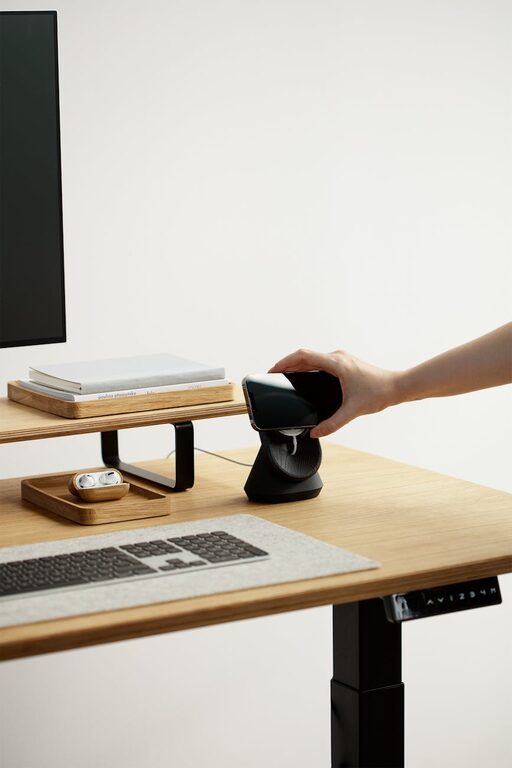
Standing desks or desk converters let you alternate between sitting and standing, which can reduce fatigue and improve circulation.
Organize for Minimal Clutter
Keep Essentials Handy
Arrange frequently used items so that you can reach them easily without disrupting your flow.
Use Storage Solutions
Drawers, shelves, and organizers keep papers and tools out of sight, maintaining a clean surface that’s easier to focus on.
Cable Management
Tidy cables reduce visual noise and the risk of tripping. Use clips, sleeves, or boxes to hide wires neatly.
Personalize Your Space Thoughtfully
Add Plants
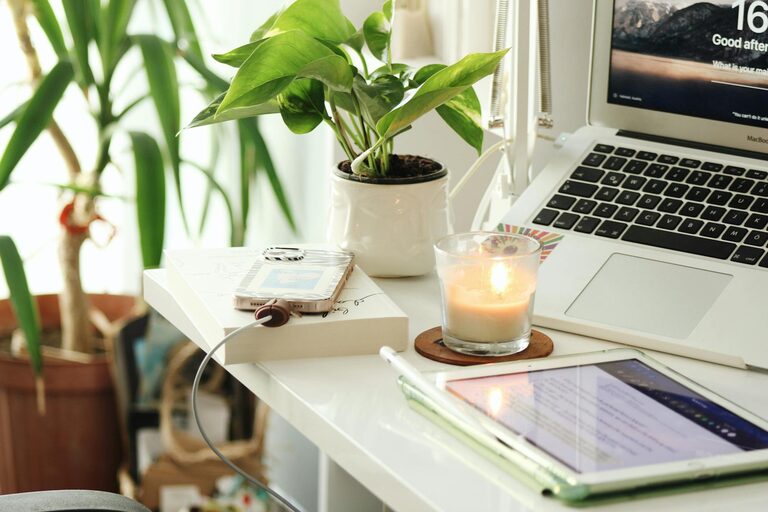
Indoor plants improve air quality and add a natural touch that can calm your mind.
Choose Calming Colors
Soft hues like light blues, greens, or neutrals create a peaceful atmosphere that can help you stay relaxed.
Display Inspiring Items
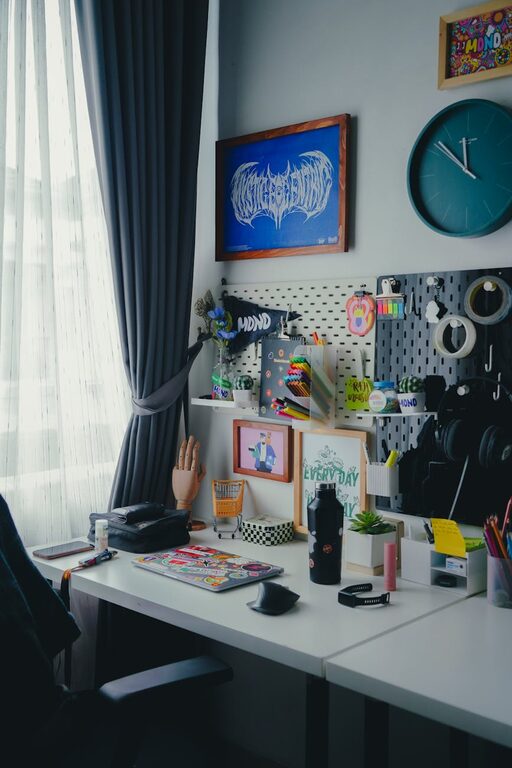
Photos, artwork, or meaningful objects can boost your mood and motivation, but avoid overcrowding your space.
Manage Lighting Wisely
Layer Your Lighting
Combine ambient light with task lighting to reduce eye strain. A desk lamp focused on your working area helps maintain focus.
Avoid Harsh Fluorescent Lights
If possible, opt for warmer LED bulbs that mimic natural daylight.
Establish a Routine and Boundary
Set Work Hours
Having consistent start and end times helps your brain switch between work mode and relaxation.
Take Breaks
Incorporate short breaks to stretch, hydrate, or step outside, which refreshes your mind and body.
Limit Distractions
Turn off unnecessary notifications and create signals for family members or roommates to respect your work time.
Enhance Comfort with Technology
Quality Headphones
Noise-cancelling headphones can block out background noise and help you stay concentrated.
Reliable Equipment
Ensure your computer, internet, and other devices run smoothly to avoid frustration.
Adjust Screen Settings
Customize brightness and contrast to reduce eye fatigue.
Final Thoughts
Creating a relaxing home workspace is about blending functionality and comfort. By thoughtfully considering your environment, furniture, organization, and personal touches, you can build a space that supports your productivity while keeping stress at bay. Experiment with different setups and listen to your needs to find what works best for you.
The right workspace sets the tone for your workday and helps you maintain focus and well-being, making every hour you spend at your desk more enjoyable and effective.